Bahasa Indonesia
 English
PKM - Assignment for Professors and Lecturers in Structural Positions

As part of the Pengabdian kepada Masyarakat (PkM) for Distinguished Professors and Structural Lecturers, the community service team from the Center of Excellence for Science and Technology (PUI) Educational Resilience, Universitas Negeri Yogyakarta (UNY) organized a training program entitled "Training on the Evaluation of Child-Friendly School Policies for Teachers in Magelang City." The program supports the achievement of Sustainable Development Goals (SDGs) 4: Quality Education by strengthening educators' capacity to evaluate the implementation of Child-Friendly School (CFS) policies.
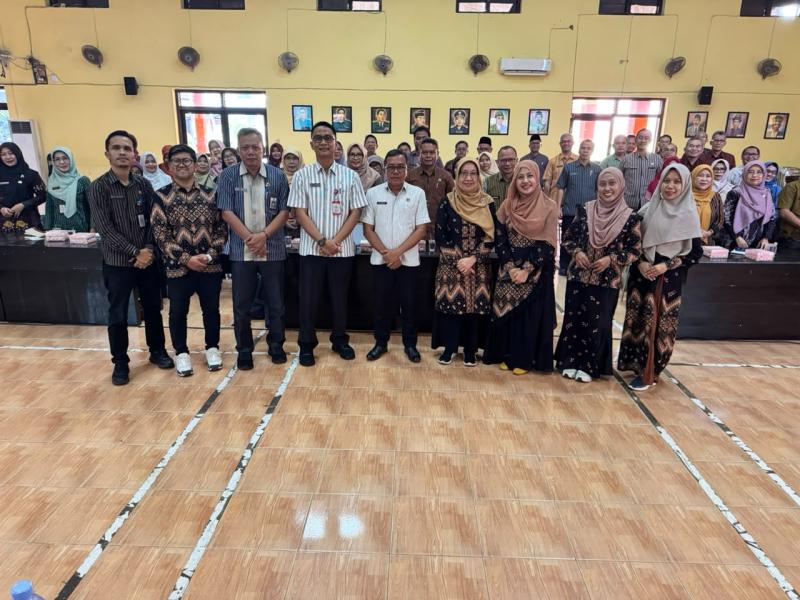
The community service team was led by Dr. Riana Nurhayati, M.Pd., with Tampi Prehadini, M.Pd., and Muhammad Saiful Anwar, MPA. serving as team members. The training was attended by 30 participants, consisting of school principals and teachers from various schools across Magelang City.
In her opening remarks, Dr. Riana Nurhayati, M.Pd., Chair of the community service program, emphasized that the training aimed to enhance participants' understanding and competencies in evaluating the implementation of Child-Friendly School policies within their respective schools. She highlighted that policy evaluation is a crucial process to ensure that educational policies effectively contribute to students' well-being and foster learning environments that are safe, inclusive, supportive, and free from all forms of violence.
The welcoming remarks from the Magelang City Government were delivered by Ms. Tutik Damayanti, S.E., Secretary of the Magelang City Department of Education and Culture. She expressed her appreciation for the organization of the training, noting its relevance to ongoing efforts to improve the quality of education in Magelang City. She also encouraged participants to apply the knowledge gained during the program to strengthen child-friendly school practices and reinforce the protection of children's rights within educational settings.
Throughout the training, participants explored key topics including the concepts and indicators of Child-Friendly Schools, the principles of educational policy evaluation, and strategies for developing evaluation instruments that can be implemented in their own schools. The program was delivered through interactive sessions featuring discussions, case studies, and experience-sharing activities, enabling participants to identify implementation challenges and collaboratively formulate practical solutions.
Through this initiative, it is expected that school principals and teachers will strengthen their capacity to conduct systematic policy evaluations, thereby enhancing the effectiveness and sustainability of Child-Friendly School implementation. This program also reflects the tangible contribution of the PUI Educational Resilience, Universitas Negeri Yogyakarta, in advancing the quality of education through impactful community engagement and capacity-building initiatives.